The Vitamin Effect
Biotin, also known as B7, is a water-soluble vitamin that can be found in various foods like eggs, milk and bananas. It plays a crucial role in cell growth, carbohydrate metabolism and fatty acid synthesis, playing a key role in supporting overall health. Biotin is involved in metabolic processes related to the utilization of fats, carbohydrates, and amino acids, while also influencing cell growth and blood sugar levels. People often take biotin supplements for hair loss, brittle nails, and nerve damage. Additionally, biotin is believed to have anti-inflammatory effects, improve cognitive function, raise HDL (good) cholesterol and lower LDL (bad) cholesterol.
What is Biotin Deficiency?
Biotin deficiency is rare but can cause issues such as hair loss, skin problems, and neurological symptoms. Although it’s uncommon to have low biotin levels since only a small amount is needed for proper function, it is still possible. Unlike other vitamin deficiencies, there isn’t a reliable lab test for detecting low biotin levels, so it’s best identified through symptoms. These symptoms may include thinning hair, red/scaly rash around the nose, eyes, and mouth, depression, fatigue, hallucinations and tingling sensations in the arms and legs.
Benefits of Biotin Injections
Biotin IV or IM injections are beneficial for conditions like skin rashes, brittle nails, thinning hair, diabetes, and nerve pain, particularly in cases of acute deficiency. While oral biotin supplements are commonly used to promote hair growth and strengthen nails, injections are more suitable when immediate results are desired. Injections allow for maximum absorption of the vitamin directly into the body, bypassing the digestive system’s metabolic processes that can affect the bioavailability of oral supplements.
Precautions/Side Effects
Speak with your healthcare provider if you are currently taking certain medications that can lower your blood levels of biotin, such as carbamazepine, phenobarbital, phenytoin, or primidone. Although there are no risks in adding biotin to your diet or regimen, it is always important to check with your doctor before adding any new supplementation to your routine. Since biotin is water-soluble, any extra in your body flushes out through the urine, so overdose is highly unlikely. If you develop any unusual or unexpected rashes, see your doctor as this may be sign of an overdose. In this case, dosages will need to be adjusted.
Some common side effects include:
– Nausea
– Abdominal pain or cramping
– Diarrhea
MIC Injections can improve energy, mood and overall health; and along with appropriate diet and exercise can aide in weight loss.
MIC with Vit B12 is given IM (intramuscular)
Methionine: is a non-essential amino acid that plays a critical role in metabolism and health.
It is an antioxidant and may help protect the body from damage.
Inositol: supports the transfer of nutrients at the cellular level and converts fats into other forms of energy.
Choline: is essential for fat metabolism and detoxification reactions in the liver.
Side effects:
- Mild swelling and redness at the injection site
- Upset stomach
- Light headedness.
If you have allergies, you should advise your medical professional before receiving treatment.
What Is Glutathione?
Glutathione is normally in our cells, made from three amino acids: cysteine, glutamate, and glycine.
Glutathione acts as an important antioxidant, it helps combat free radicals, molecules that can damage your body's cells. It helps detoxify chemicals, including some that your body creates naturally, as well as pollutants and drugs.
Glutathione levels become more depleted as we age.
Benefits of Glutathione:
Maintaining glutathione levels may help prevent various chronic, age-related diseases
Glutathione may reduce dark spots or lighten skin however there is limited evidence.
Glutathione can help to flush out toxins in the liver and may help protect the liver from damage.
Some research suggests that glutathione may help with weight loss.
Precautions/Side Effects:
- Pain, redness at injection site
- Nausea
- Headache
- Flushing
- Contraindicated with asthma and advanced kidney disease
Nicotinamide Adenine Dinucleotide is a form of Vitamin B3 (Niacin). This coenzyme is found in the mitochondria of all living cells and heavily involved in metabolism, DNA repair and cellular remodeling. It is believed to down grade the genes that accelerate degenerative aging and is essential for maintaining neurotransmitter levels to support brain function.
As we age, our NAD levels naturally decrease making us less able to repair cellular.
damage. NAD+ supplementation plays a significant role in anti-aging. With NAD+ IV therapy and the NAD+ IM injection, the molecule works rapidly to repair cells throughout the body.
Benefits of NAD+ supplementation:
● Increase energy levels
● Enhance mood & mental clarity
● Reverse the visible effects of aging
● Reduce fatigue
● Restore muscle function and athletic performance
● Restore brain chemistry and neurotransmitter function
● Prevent & correct damage to DNA
● Regulate inflammation that damages DNA
● Improve health, and quality of life
Precautions/Side Effects:
Most side effects are directly related to the speed at which the IV is infused at the time of the infusion. They can be relieved by slowing down the infusion. Side effects lessen with subsequent infusions.
● Headache or fullness/pressure in the head
● Chest tightness
● Anxiety feeling
● Nausea/abdominal cramping
What are some contraindications the provider may ask me about?
● Allergy to Vitamin B3 or Niacin
● History of any form of cancer
● Patients on dopamine agonists, NAD has been known to increase Dopamine levels
Dopamine agonists can be used for Parkinson’s, depression and fibromyalgia
PRE/POST Care of Some of Your Favourite Treatments
Typical Symptoms:
a. 10% of people experience a headache post-treatment. If this occurs, you may take plain Tylenol®.
b. Redness, swelling, bruising and slight bleeding at the injection site may occur.
Do’s and Don’ts:
a. Contract and release the treated muscles every 10 minutes for next hour
b. Do NOT lie down for 4 hours following your treatment
c. AVOID massaging or applying pressure to the treatment area(s) for at least 4 hours as this may alter the placement of the product
d. AVOID wearing a at or a visor for 4 hours if the forehead was treated
e. AVOID heavy exercise, heavy straining/lifting and extreme heat (AKA hot tub/sauna) for 4 hrs. You may resume other normal activities/routines immediately
f. AVOID additional skin care treatments for at least 14 days
*Results should be seen by 14 days; if you don't see results or are unsatisfied contact your practitioner*
Typical Symptoms:
a. Bruising at the treatment site may occur
b. Temporary moderate swelling can be expected in treatment area(s)
c. Tenderness at the treatment site (for a few hours to a couple days)
d. Firmness at the treatment site for the first few days after treatment. Over time, the area/s will soften and ‘settle'
DO'S AND DON'TS:
a. Apply cool compresses to the area(s) treated, every 15 minutes each hour; however avoid pressure at this may cause shifting of the product.
b. Avoid touching your face and ensure you keep your skin clean to prevent infection.
c. You may begin wearing makeup once you have cooled/iced the area/s, and any pinpoint bleeding from the injection site(s) has subsided (at least 4 hours).
d. DO NOT RUB OR MASSAGE the treated area(s) on the day of treatment. When cleansing your face or applying makeup, use gentle sweeping motions to avoid excessive mobility of the area(s).
e. AVOID heavy exercise and extreme heat (AKA hot tub/sauna) for 24 hrs. You may resume other normal activities/routines immediately.
f. AVOID aspirin, ibuprofen and alcohol for a minimum of 72 hours as this may increase your potential to bruise.
g. AVOID extended UV exposure until any redness has subsided (72 hours). Apply an SPF 30 daily to the treated areas.
h. Wait a minimum of 6 weeks before receiving any laser treatments and 14 days before additional skincare treatments.
i. Try to sleep face up or in an elevated position to prevent excessive pressure on injection site(s).
j. Avoid alcohol and excessive salt to avoid excessive bruising and/or swelling.
*Redness, tenderness and small bruising is possible after injections. If you experience a greyish bruise, blanching of the skin, excessive pain, heat at the injection site or anything that you are worried about, contact your provider directly*
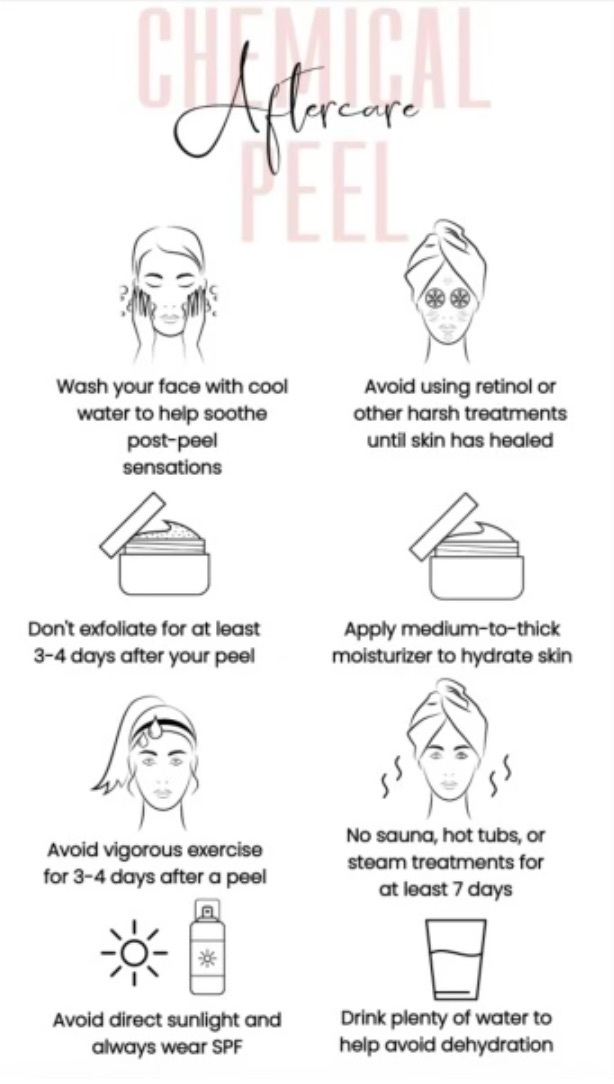
Immediately following treatment, the area may have erythema (redness), some swelling, be itchy or feel like a sunburn. This should resolve within a few hours to a couple of days following treatment.
Apply cool compresses to area as desired.
During the healing phase, the area must be treated delicately due to increased sensitivity.
Do not rub, scratch, or pick.
Avoid using abrasive products, such as scrubs and exfoliating brushes; hair removal creams and waxing for a minimum of 7 days.
Keep face clean with a gentle cleanser and well hydrated.
Try to avoid make-up/products, strenuous exercise and excessive heat for 24 hours or at least until the following morning post procedure.
Avoid sun exposure throughout the course of treatment and use a broad-spectrum (UVA/UVB) sun block of at least SPF 30, even when indoors.
Avoid retinoid or glycolic products for a minimum of 72 hours or if skin is still sensitive days post treatment.
Vitamin C products may be resumed after 72 hours post treatment.
Post treatment skin care instructions must be followed to prevent complications.
In case of signs of infection or unmanageable irritation (excessive redness, pain, discharge, fever), contact your practitioner directly
The effects are almost immediate for most patients, so you should start feeling the results right away.
After the treatment is complete, we advise the following:
1. Leave the bandage on for at least 4 hours. After this time, there should be no further bleeding. If you notice small amounts of bleeding on the bandage apply gentle pressure for approximately 10 minutes.
2. Keep the area clean and dry after the bandage has been removed.
3. Avoid intense activity or stress to the puncture site for 24 hours post treatment.
The IV Drips are clinically tested, stability tested and their ingredients are premium and safe. Everyone is unique and you could experience the effects of the treatment differently than another person and unfortunately, we are no able to foresee if you will react differently.
An adverse reaction can occur if any of the ingredients on the IV formula interacts unexpectedly with other substances in your body, or if there are existing or potential medical condition we are unaware of.
Contact your practitioner and/or seek immediate medical assistance if:
- The bleeding won't stop at the puncture site or it is significant in nature.
- You develop swelling at the puncture area that won't dissipate after 24 hours.
- You develop any numbness around the puncture site or throughout the entire arm.
- You develop shortness of breath, a rash, or an itching sensation--this could be an allergic reaction.
- If you develop a fever.
- If you develop redness, warmth and swelling at or around the puncture site.
- If an abnormally large bruise develops at the puncture site
During the healing phase, the area must be treated delicately due to increased sensitivity.
Post treatment skin care instructions must be followed to prevent any complications and hyperpigmentation.
Immediately following treatment, the area may have erythema (redness), some swelling, be itchy or feel like a sunburn. This should resolve within a few hours to a couple of days following treatment.
Wash area gently starting the next day with cool or lukewarm water with a gentle cleanser with clean hands. Do not use a washcloth or other abrasive material.
Pat dry. DO NOT RUB OR MASSAGE the treated area(s) on the day of treatment. When cleansing your face or applying makeup, use gentle sweeping motions to avoid excessive mobility of the area(s). Do not touch, rub, scratch, or pick any areas of the skin. This leads to high risk of infection (discharge, tenderness, increased swelling, fever).
Apply bland moisturizer or what your provider instructed you to use.
AVOID retinoids, retinols, salicylic/glycolic acids, Vitamin C products, or any other anti-aging products for 7-10 days post treatment.
Avoid sun exposure throughout the course of treatment and use a broad-spectrum (UVA/UVB) sun block SPF 30 or greater every morning, even when indoors and reapply as necessary. Wear a large brimmed hat when outside.
Avoid strenuous exercise and excessive heat for 24 hours or at least until the following morning post procedure.
Crusting is rare but may occur and should heal over in 1-3 days; contact your practitioner if you are concerned.
You may begin wearing makeup once after the wounds have healed over and any pinpoint bleeding from the injection site(s) has subsided (at least 4 hours).
Avoid alcohol and excessive salt to avoid excessive bruising and/or swelling.
Contact your provider directly if you have any concerns.
You may start to feel the positive effects of the infusion within 3-4 days, with a steady increase over the next 2-3 weeks.
Side effects of an iron infusion are uncommon, and most patients can resume their daily activities with no restrictions. Occasionally, patients may experience an inflammatory reaction while the iron is absorbed, which can feel like: muscle aches, joint pain, a mild fever, and malaise. These symptoms typically get better with Tylenol or Advil.
It is possible for patients to experience a hypersensitivity reaction for up to 5 days following the infusion. This could be a rash, itching, or hives. The vast majority of allergic reactions occur immediately, but it's important you are aware of this uncommon but possible delayed side effect. This is typically responsive to one dose of an over-the-counter antihistamine such as Benadryl. True anaphylactic reactions (severe allergic reactions) have an incidence of less than one in 200,000 but if you experience any of the following please call 911 for immediate help: significant dizziness, swelling in face, tongue, or throat, difficulty swallowing, extensive hives that do not respond to oral medication, or any difficulty breathing.
You should have iron levels tested again at 6 weeks post-infusion. If you test sooner, the levels may come back falsely elevated.
You should receive a requisition from ra.di.ant aesthetics & wellness or your own physician. Please ensure you have registered for "My Health Portal" or book a follow up appointment with your provider or one at ra.di.ant aesthetics and wellness to review your results.
In the meantime, you do not need to take an iron supplement, but you can continue to include iron-rich foods in your diet. At your follow up visit, we will discuss when/if you will need to resume iron supplementation.
Use a broad-spectrum SPF 30+ daily on areas to be treated for at least 2 weeks prior to appointment.
To reduce the risk of hyperpigmentation, consider using a product to suppress melanocyte activity (e.g., hydroquinone), especially if you have a darker skin tone.
If you have a history of cold sores, ask for or use antiviral medication.
Avoid the following for at least two weeks before treatment:
- Anticoagulants (e.g., NSAIDs, ASA, Blood Thinners [Discuss this with your primary care provider first])
- Iron supplements
- Herbal supplements (e.g., ginkgo, ginseng, garlic, St. John's Wort)
- Tetracycline antibiotics (e.g., doxycycline)
- Any medications that cause photosensitivity (e.g., amiodarone, hydrochlorothiazide)
- Sun exposure, tanning bed use, spray tanning, or tanning products
- Neuromodulator injections in the treatment area
- Any professional skin treatment in the treatment area
- Retinol, AHAs, or other active topicals
It is recommended that the areas to be treated are shaved 1 to 3 days prior to treatment for hair-bearing areas.
No makeup, lotions, deodorant or oil is allowed on the area to be treated the day of treatment.
A. GIVE YOURSELF FACIAL MASSAGES
Thoroughly massage the treated area in a circular fashion for 5 minutes, 5x / day for 5 days OR 2 minutes, 2x /day for two weeks after each treatment. This helps to evenly distribute Sculptra and promote a natural-looking correction. THIS MINIMIZES THE RISK OF NODULES.
B. AVOID EXCESS SUNLIGHT AND UV EXPOSURE
Minimize exposure of the treated area to excessive sun and avoid ultraviolet lamp exposure until any initial swelling and redness have disappeared. Wear SPF (at least 30) daily even when indoors.
C. CAREFULLY CONSIDER OTHER PROCEDURES
Avoid Laser treatments, Chemical peels, Microneedling, RF Micorneedling or any other skin procedure based on active dermal response for at least 14 days to reduce the risk of eliciting an inflammatory reaction at the implant site.
On average, three injection sessions are needed over a period of a few months.
After you reach your treatment goals with Sculptra, it is advised you maintain your results with 1-2 Sculptra treatments every year. It is important that you understand that Sculptra aids in the production of collagen, therefore you must commit to maintenance for best results. Maintenance will prolong your investment and keep your skin looking its best.
NOTE: If you believe you are having a medical emergency, please call 911 or visit your nearest emergency department.
Immediately following treatment, the area may have swelling, tenderness, redness and swelling. This should resolve within a few hours to days following treatment and you can apply clean, cool compresses to area.
Do not touch or wash your face for at least 6 hours following the treatment as we want the needle injuries to heal over. After this time you can wash the area with a gentle cleanser and clean hands.
You can use your regular skin care products.
Use a broad-spectrum (UVA/UVB) sun block SPF 30 or greater every morning, even when indoors.
AVOID heavy exercise, heavy straining/lifting and extreme heat (AKA hot tub/sauna) for 24 hrs. You may resume other normal activities/routines immediately.
AVOID additional skin care treatments for at least 14 days.
Avoid touching your face and ensure you keep your skin clean to prevent infection.
You may begin wearing makeup once you have cooled/iced the area/s, and any pinpoint bleeding from the injection site(s) has subsided (at least 6 hours).
AVOID blood thinning medications as reviewed in your consent such as aspirin, ibuprofen, some herbs and alcohol for a minimum of 24 hours and ideally 3 days.
Please contact your practitioner directly if you have any concerns.
